Case Study: 3 Hospitality Businesses Halve Scheduling with Shiftbase
- ›
- Customers stories
- ›
- Case Study
Industry:
Hospitality
Sunday night, and the schedule still isn't right
It's Sunday night. Next week's schedule is half-built in a spreadsheet, the group chat is filling up with swap requests, and a kitchen hand has just called in. You retype the change, send the schedule round again, and on Monday someone still turns up to a locked door.
That's not one busy week. That's every week. The overview isn't there, and the hours you spend on the schedule come out of the time for your guests and your team. Most people don't feel the cost until the manual way breaks once: a shift left uncovered, a team member who came in for nothing. That's usually the moment a hospitality operator starts looking for something better.
Half the time on scheduling, every time
Hospitality teams that move off spreadsheets and group chats to Shiftbase cut the time they spend scheduling in half. More than 8,000 businesses now run on Shiftbase. The three below are all single-site hospitality, and each went about the switch differently. The outcome is the same every time: less time on the schedule, more grip on the week.
| Customers | Results |
|---|---|
| Museum of World Cultures | 75% time saving; 4 to 5 hours a week on scheduling |
| Escape Amsterdam | 30% on availability inventory; scheduling down to 12 to 14 hours a week |
| Aards Eetbar & Wijnwinkel | At least three hours a week saved |
National Museum of World Cultures: planning and approvals in one place
 At the National Museum of World Cultures (culture, 140 employees), several team leaders shared the scheduling, and signing off everyone's hours took too long.
By planning shifts and approving hours in one place, they cut scheduling time by 20%, and five team leaders together save two hours a month on approvals.
Aards Eetbar & Wijnwinkel: connect the tools, stop re-keying hours
Aards Eetbar & Wijnwinkel (hospitality, 2-25 employees, single site) ran the schedule next to separate tools and re-keyed the same hours more than once.
By connecting the schedule to their other tools so the hours flow through once, Vic Gruntjes saves at least three hours a week. "I spend at least three hours less a week", says Vic Gruntjes, co-owner.
Escape Amsterdam: staff enter their own availability
 Escape Amsterdam (hospitality, 150 employees, one site) runs a large, flexible crew. Keeping track of when 150 people could work was a job in itself.
Now staff enter their availability in the mobile app, and the team builds the schedule on top of that. That switch gave them a 30% time saving on availability inventory and brought scheduling down to 12-14 hours a week.
Three routes, one outcome
Three teams, three routes. One reuses shift templates, one connects the schedule to their other tools, one lets staff enter their own availability. You don't get one template dropped on every business. You pick the route that fits yours. What they share is the outcome: half the time on the schedule, more grip on the week.
Try Shiftbase scheduling yourself
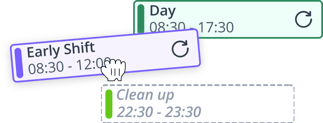
- Create rosters quickly
- Insight into labor costs
- Access anywhere via the app